1. Introduction
A beautifully designed website should help your business grow. However, many organisations invest in aesthetics while neglecting the factors that truly influence conversions. The result is a digital brochure that looks impressive but does little to bring in enquiries or sales. This article explores why visually appealing sites often underperform as lead‑generation tools and what you can do to change that.
2. The Illusion of a “Perfect” Website
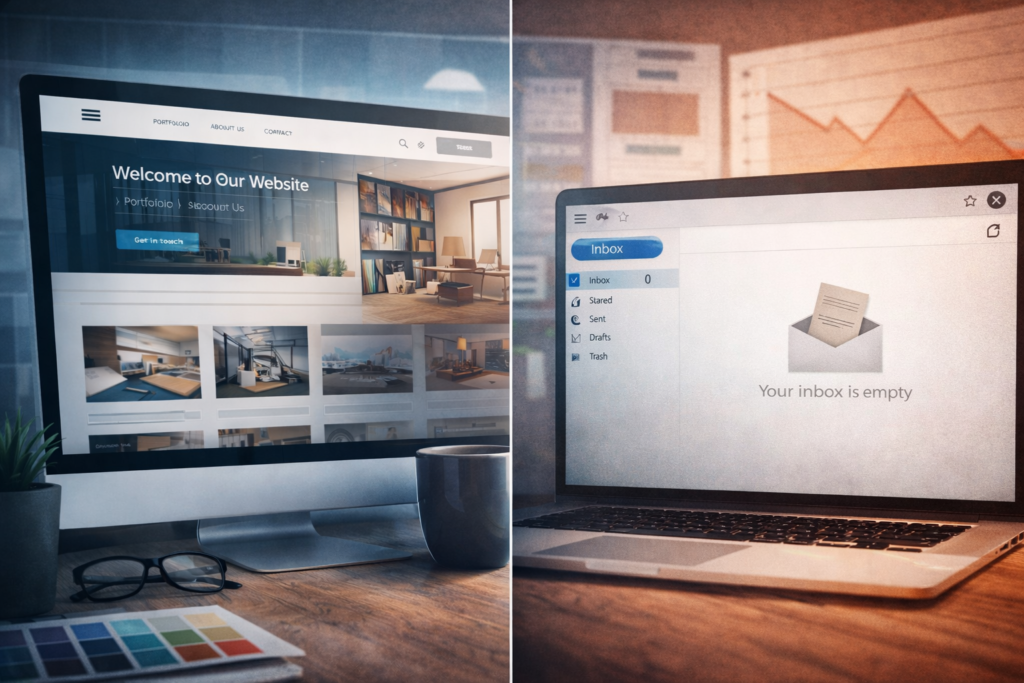
It’s easy to believe that polished visuals and slick animations guarantee success. Yet many companies find that their “award‑worthy” designs barely move the needle. According to a 2025 LinkedIn post on why beautiful sites fail to generate leads, the problem often stems from design over clarity. Fancy layouts and moving elements can distract from the message, leaving visitors unsure about what you actually offer. A site built purely to impress rarely guides a visitor toward a business outcome.

3. No Clear Purpose or Goal
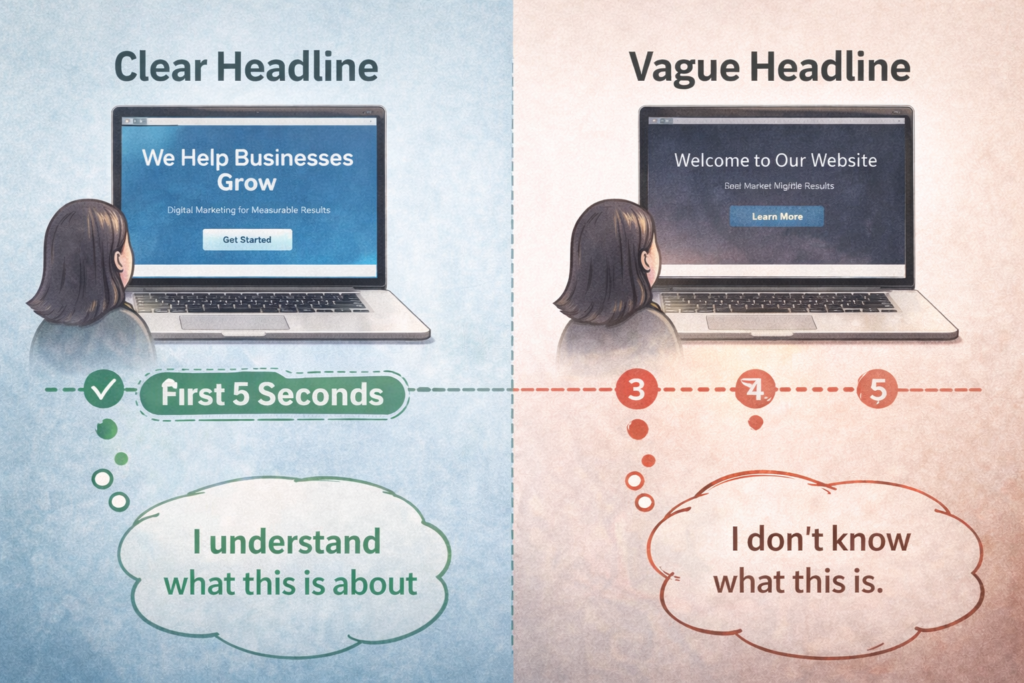
Visitors need to understand, within seconds, what you do and why it matters to them. Bluesoft Design notes that most visitors decide in five seconds whether to stay or leave. Generic taglines like “Innovative solutions” are meaningless, yet they often dominate hero sections. Without a clear value proposition and defined goal for the page, visitors won’t know what action to take. Everything on the page should support a primary objective—whether that’s scheduling a consultation, downloading a guide or booking a demo.
4. Poor User Experience Despite Good Design
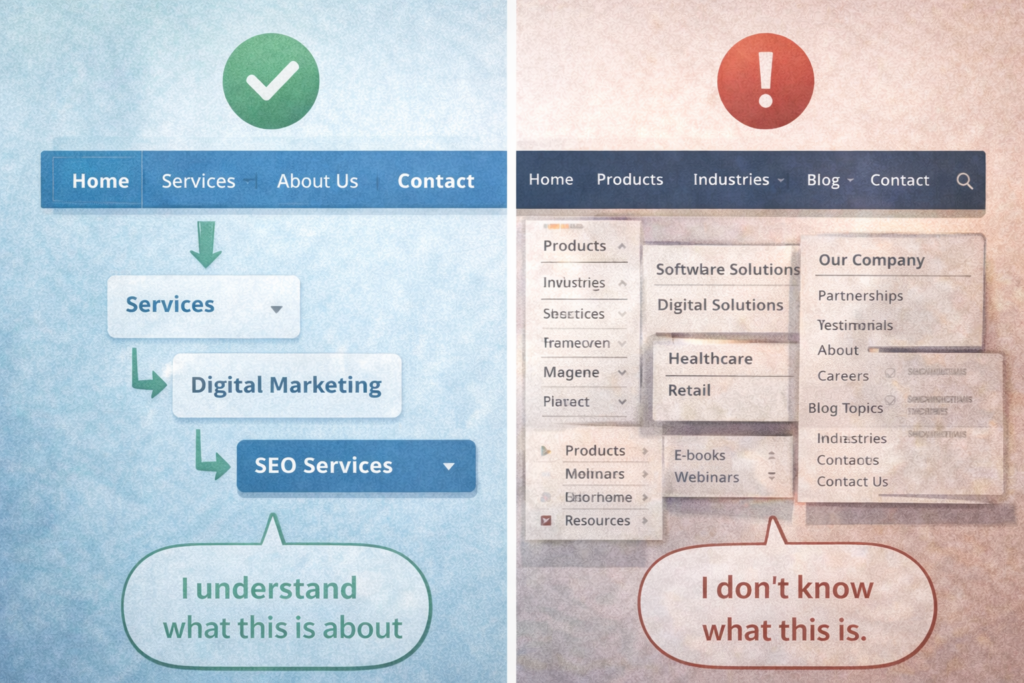
Visual appeal means nothing if the site is hard to use. Bluesoft Design points out that beautiful sites with confusing navigation or unreadable buttons will lose users quickly. Likewise, Social House’s 2026 analysis highlights that a high‑converting site guides users toward one outcome and that overloaded menus and unclear journeys make visitors work too hard. When people can’t find information or the path to a form, they abandon your site—no matter how attractive it looks.
5. Weak or Unclear Call to Action
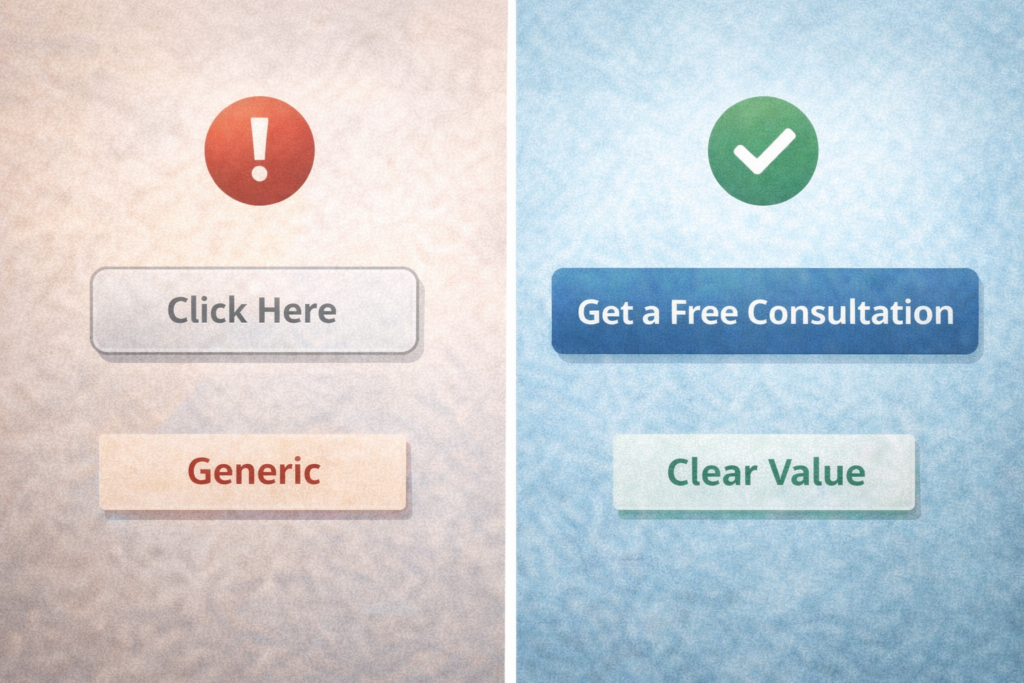
If you don’t clearly tell visitors what to do next, they won’t do anything. The Websoft Techno article notes that many sites either use generic CTAs like “Submit” or hide them below the fold. Poorly worded buttons or CTAs that blend into the design fail to stand out. Effective CTAs are action oriented, specific and strategically placed across the page.
6. Website Speed and Performance Issues
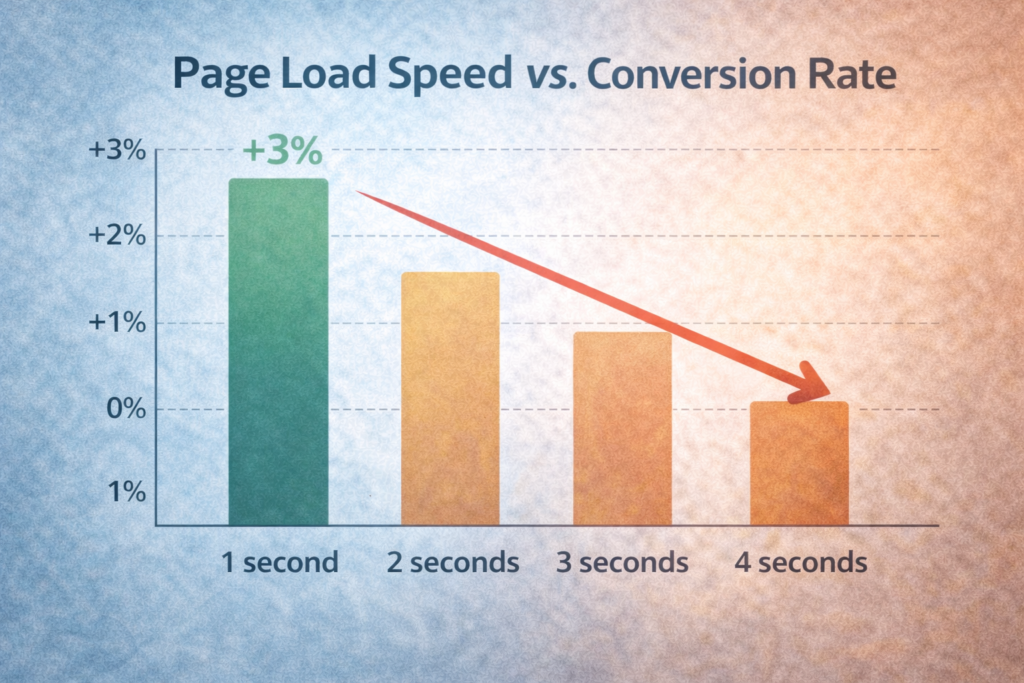
Speed is not a secondary consideration; it directly affects conversions. Ladder Digital reports that a 2024 analysis found B2B sites loading in one second convert at five times the rate of those taking five seconds, while B2C sites see a 2.5× improvement. Slow or clunky sites erode trust. Optimising images, deferring non‑critical scripts and leveraging caching can reduce load times. Aim for pages that load in under three seconds and maintain a responsive feel as visitors interact.
7. Mobile Experience Is Ignored
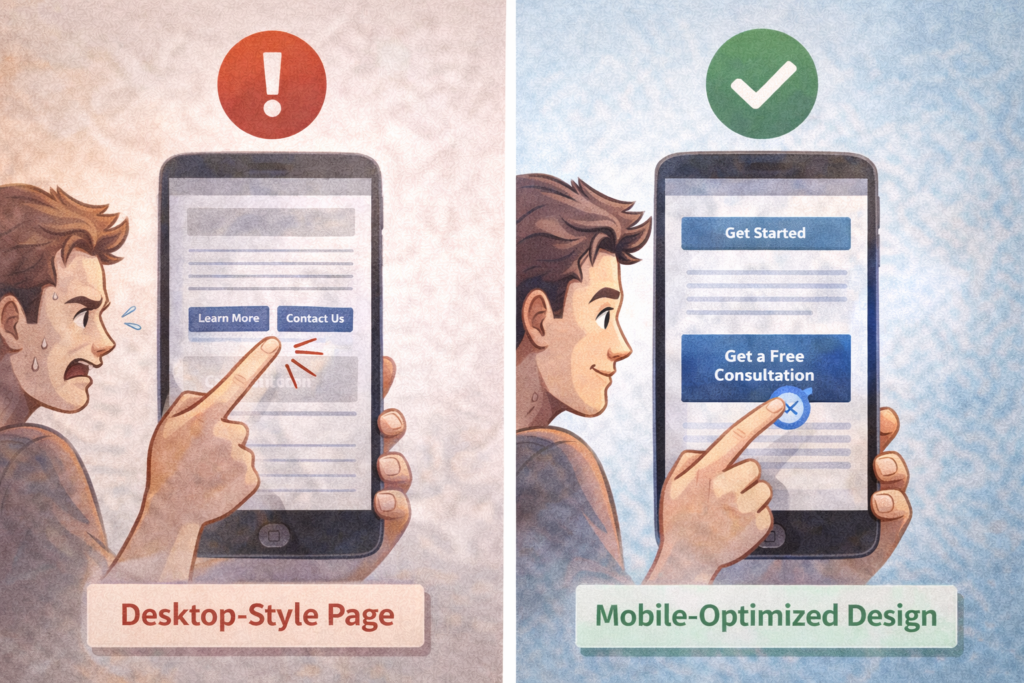
Mobile dominates web traffic, yet many sites are still designed primarily for desktop. Ladder Digital notes that around 64 % of visits come from mobile, and if a site doesn’t load within three seconds, 53 % of users will bounce. Social House emphasises that a site must feel built for thumb and touch; links and buttons should have adequate tap areas and content should resize properly. Neglecting mobile users means ignoring a majority of your potential leads.
8. Content That Looks Good but Says Nothing
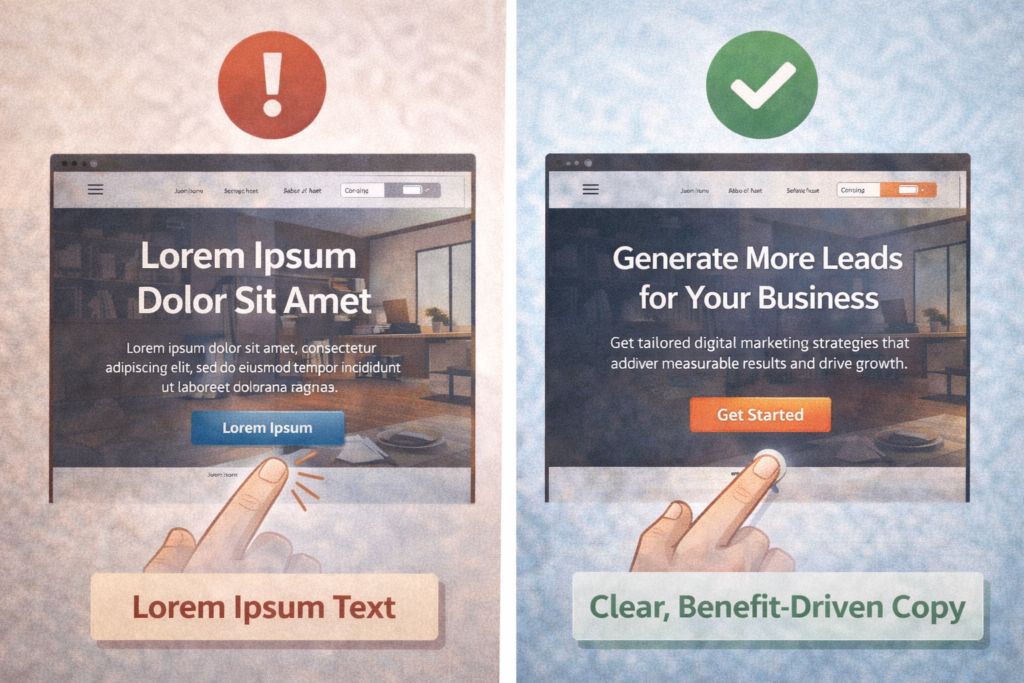
A site can have sleek typography and modern layouts yet still fail when the copy is empty or generic. Bluesoft Design stresses that content must educate, build trust and inspire action. Generic language and keyword stuffing undermine credibility, while problem‑focused messaging helps visitors feel understood. If your content doesn’t answer visitor questions or address their pain points, it’s just decoration.
9. Trust Signals Are Missing
Trust is a prerequisite for lead generation. Social House’s 2026 article notes that visitors lose confidence when a site lacks testimonials, third‑party reviews or clear contact information. Ladder Digital adds that without customer proof, security cues (such as SSL icons) or an “About” section, attractive sites can still feel untrustworthy. Bluesoft Design agrees, noting that testimonials, real photos of your team and a visible privacy policy build confidence. Including these signals reassures visitors that you are legitimate and safe to engage.
10. SEO Brings Traffic but Not the Right Traffic
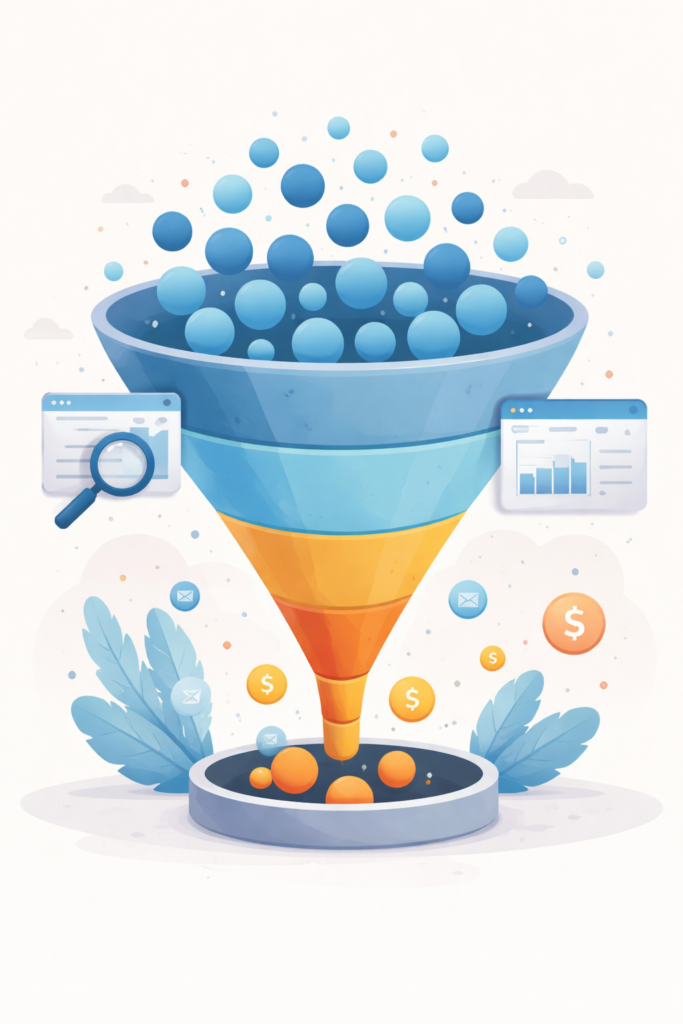
Driving more traffic doesn’t guarantee more leads. Social House warns that generic or top‑of‑funnel keywords bring visitors who aren’t ready to buy. Bluesoft Design echoes this, explaining that you need to target search terms aligned with buyer intent. Focus your SEO and content strategy on the services you offer and the problems you solve, rather than chasing broad keywords. This ensures that the people who find you are more likely to convert.
I
11. Forms and Lead Capture Are Poorly Designed
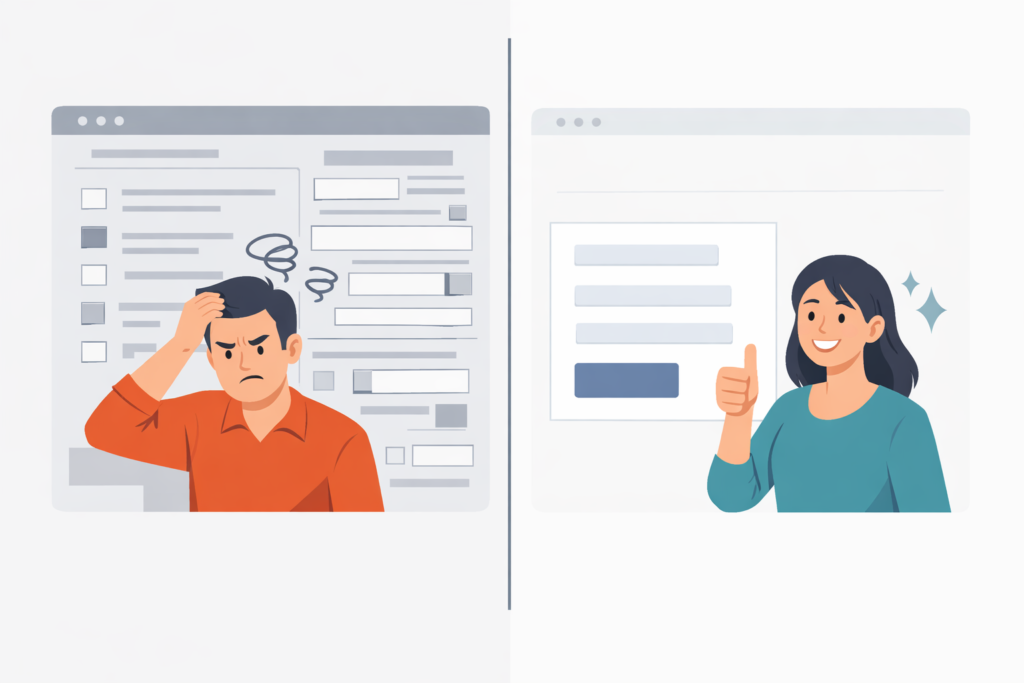
Forms are where visitors become leads, so every element matters. Research on form design shows that longer forms increase abandonment; Quicksprout found that reducing fields from four to three boosted conversions by nearly 50 %. Confusing labels, weak layouts and poor mobile optimisation also hurt form completion. Bluesoft Design notes that forms should ask only for essential information and should be positioned where they make sense. Make CTAs on forms clear and avoid overloading visitors with mandatory fields. A well‑designed form signals respect for the user’s time and builds trust.
12. No Tracking or Optimization
If you aren’t measuring performance, you can’t improve it. Ladder Digital emphasises that brands that make analytics foundational can outperform competitors by up to 23 ×. Without event tracking, heatmaps or funnel analysis, you won’t know which pages drive enquiries or where users drop off. The solution is to set up tools like Google Analytics 4 and heatmaps, run A/B tests and regularly review reports. Bluesoft Design echoes this advice, noting that metrics such as form submissions, button clicks and time on page tell a story. Data‑driven improvements help convert a static site into a living sales tool.

13. How to Turn a Good Looking Website into a Lead Machine
Transforming a visually pleasing site into a conversion engine requires aligning design with strategy. Based on the sources above, here’s a concise checklist:
| Area | Practical actions |
|---|---|
| Define purpose | Clarify page goal; use a direct, audience-focused headline |
| Simplify navigation | Remove unnecessary menu items; create clear path to enquiry |
| Use strong CTAs | Write action-oriented copy; place CTAs above the fold and throughout |
| Optimise speed | Compress images; minify code; implement caching for sub-3-second load times |
| Prioritise mobile | Design for thumb and touch; use adequate tap targets; test across devices |
| Write meaningful content | Focus on benefits and customer pain points, not generic statements |
| Add trust elements | Include testimonials, reviews, security badges; provide clear contact info |
| Align SEO with intent | Target keywords with buyer intent; create landing pages that match search queries |
| Streamline forms | Shorten forms; use clear labels; optimise for mobile; ask only for essential info |
| Track and iterate | Install analytics; use heatmaps and run A/B tests to identify issues and refine the journey |
Implementing these steps turns your website into a purposeful, data‑driven asset rather than a static design.

14. Final Thoughts: Design Supports Leads, It Does Not Create Them
Visual design is an important tool, but it is not the driver of conversions. As multiple sources note, clarity, speed, mobile experience, content and trust are the real levers of lead generation. By treating your website as part of your sales process rather than a static brochure, you can ensure that every element—from the headline to the form—serves a clear purpose. Design supports these goals; it does not replace them.

15. Soft Call to Action
Your website’s purpose is to start conversations. If you’re concerned that your polished site isn’t generating the leads you expect, consider reviewing it with a seasoned professional. I offer website audits that focus on clarity, user experience and conversion strategy. Get in touch to discuss how we can align your design with your business goals and turn your site into a powerful lead generator.